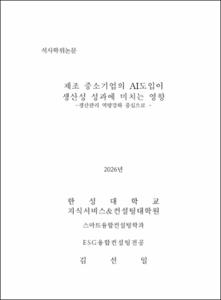
제조 중소기업의 AI도입이 생산성 성과에 미치는 영향
= A Study on the Impact of Artificial Intelligence(AI) Adoption on Productivity Performance in Manufacturing SMEs
- Type
- Thesis
- Alternative Title
- 생산관리 역량강화 중심으로
- Abstract
- 본 연구는 자원기반관점(RBV)의 VRIO(가치, 희소성, 모방불가능성, 조직화) 프레임워크를 기반으로 제조 중소기업의 생산관리 AI 도입 역량을 진단하고, 이러한 내부역량이 저원가 전략 성과와 제품 차별화 전 략 성과에 미치는 영향을 실증적으로 규명하는 것을 목적으로 한다. 또 한 기업이 처한 외부환경 대응역량에 따라 AI 도입의 성과가 어떻게 달 라지는지 분석함으로써, 중소기업의 경쟁력 수준에 따른 차별화된 AI 도입 전략을 제시하고자 하였다. 본 연구는 국내 제조 중소기업 중 생산관리 영역에 AI를 도입하였 거나 추진 중인 기업을 대상으로 총 339개의 데이터를 수집한 후, SPSS 통 계 패키지를 활용하여 분석하였다. 독립변수는 VRIO 프레임워크에 기 반하여 AI 가치성, 희소성, 모방불가능성, 조직화로 구성하였으며, 종속 변수는 생산성 성과인 저원가 성과와 제품 차별화 성과로 설정하여 분 석을 진행하였다. 분석 결과, AI 도입 내부역량이 생산성 성과에 미치는 영향은 전략 유형에 따라 상이하게 나타났다. 먼저 저원가 전략 성과에 영향을 미치 는 요인을 분석한 결과, AI 기술이나 설비를 보유하는 것만으로는 원가 절감 효과를 보기 어려우며, AI가 예지보전이나 자동화를 통해 실질적 인 운영 가치를 창출하고, 대외적인 인증을 통해 신뢰를 확보할 때 비 용 효율성이 극대화됨을 보여주었다. 제품 차별화 전략 성과에 있어서 는, 차별화된 경쟁우위를 확보하기 위해서는 경쟁사가 모방하기 어려운 고도화된 설비 및 기술과 이를 운용할 수 있는 숙련된 인력이 필수적임 이 입증되었다. 또한 외부환경 대응역량을 기준으로 기업들을 ‘경쟁취약 집단’, ‘중간경쟁력 집단’, ‘고경쟁력 집단’으로 분류하여 집단별 특성을 분석하였다. 경쟁력이 취약한 집단에서는, 고가의 설비 투자보다는 실질 적 가치 창출과 대외 신뢰 확보가 우선 과제이며, 중간경쟁력 집단에서 는 공정 최적화와 운영 노하우가 성과의 주요 동인이고, 고경쟁력 집단 에서는 전문 인력 양성과 지식 자산이 경쟁우위의 요인임이 확인되었 다. 본 연구는 제조 중소기업의 AI 도입을 VRIO 기반의 전략 프레임워 크로 해석하고, AI 투자 우선순위를 생산관리 관점에서 제시하였다. 제조 중소기업의 AI 도입이 단순한 기술 적용을 넘어 기업의 내부 자원 과 결합하여 전략적 성과로 이어지는 것을 규명하였다는 점에서 학문적 의의가 있다고 하겠다. 실무적으로는 중소기업의 경쟁력 수준에 따른 단계별 AI 도입 로드맵을 제시하였다. 기업의 경쟁환경 수준에 따라 AI 도입 전략의 우선순위가 달라진다는 점을 실증적으로 보여줌으로써, 제 조기업이 획일적인 스마트팩토리 로드맵을 따라가는 방식에서 벗어나 기업의 경쟁역량 수준에 맞춘 차별화된 AI 도입 전략을 수립해야 한다 는 실무적 방향성을 제시하였다.
【주요어】AI, 생산운영관리, 내부역량, VRIO|This study aims to diagnose the AI adoption capabilities of manufacturing SMEs in production management based on the VRIO (Value, Rarity, Inimitability, Organization) framework of the Resource-Based View (RBV). It further seeks to empirically clarify the impact of these internal capabilities on the outcomes of low-cost strategy and product differentiation strategy. Furthermore, by analyzing how AI adoption outcomes vary according to firms' capabilities to respond to their external environment, it seeks to propose differentiated AI adoption strategies tailored to the competitiveness level of SMEs.
This study collected data from 339 domestic manufacturing SMEs that have adopted or are pursuing AI in production management. Analysis was conducted using the SPSS statistical package. Independent variables were constructed based on the VRIO framework: AI value, rarity, inimitability, and organization. Dependent variables were set as productivity outcomes—low-cost performance and product differentiation performance—for analysis.
Analysis revealed that the impact of internal AI implementation capabilities on productivity outcomes varied depending on the strategic type. First, analyzing factors influencing low-cost strategy performance showed that merely possessing AI technology or equipment is insufficient to achieve cost savings. Instead, cost efficiency is maximized when AI creates tangible operational value through predictive maintenance or automation and secures trust through external certification. Regarding product differentiation strategy performance, it was proven that securing differentiated competitive advantage requires sophisticated equipment and technology difficult for competitors to imitate, along with skilled personnel capable of operating them. Furthermore, companies were classified into ‘competitively vulnerable groups’, ‘intermediate competitiveness groups’, and ‘high competitiveness groups’ based on external environment response capabilities, and the characteristics of each group were analyzed. For the vulnerable group, the priority tasks are creating tangible value and securing external trust rather than investing in expensive equipment. For the intermediate group, process optimization and operational know-how are the main drivers of performance. For the high-competitiveness group, cultivating specialized personnel and knowledge assets are the factors behind their competitive advantage.
This study interprets AI adoption by manufacturing SMEs using a VRIO-based strategic framework and proposes AI investment priorities from a production management perspective. Its academic significance lies in demonstrating that AI adoption by manufacturing SMEs transcends mere technology application; when combined with internal resources, it leads to strategic outcomes. Practically, it presents a phased AI adoption roadmap tailored to the competitiveness level of SMEs. By empirically demonstrating that AI adoption strategy priorities vary according to a company's competitive environment level, it suggests a practical direction: manufacturing companies should move away from following a uniform smart factory roadmap and instead establish differentiated AI adoption strategies tailored to their competitive capability level.
【Key words】AI adoption, production operations management, internal capabilities, VRIO framework, low cost, product differentiation
- Advisor
- 주형근
- Department
- 스마트융합컨설팅학과
- Issued Date
- 2026
- Publisher
- 한성대학교 지식서비스&컨설팅대학원
- Keyword
- AI, 생산운영관리, 내부역량, VRIO
- Appears in Collections:
- 스마트융합컨설팅학과 > 2. Thesis
- Authorize & License
-
- Authorize공개

- Files in This Item:
-
-
Download
 TH_P1A2A2_제조 중소기업의 AI도입이 생산성 성과에 미치는 영향 .pdf
기타 데이터 / 1.33 MB / Adobe PDF
TH_P1A2A2_제조 중소기업의 AI도입이 생산성 성과에 미치는 영향 .pdf
기타 데이터 / 1.33 MB / Adobe PDF
-
Items in Repository are protected by copyright, with all rights reserved, unless otherwise indicated.