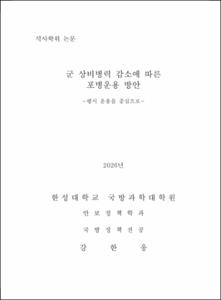
군 상비병력 감소에 따른 포병운용 방안
= Operational Measures for Artillery Employment in Response to Declining Standing Military Personnel : Focusing on Peacetime Operations
- Type
- Thesis
- Alternative Title
- 평시 운용을 중심으로
- Abstract
- 본 연구는 저출산으로 인한 병역자원 감소, 복무 기간 단축, 첨단기술의 급속한 발전, 그리고 북한군의 포병·드론·전자전 기반 복합 위협이라는 구조적 환경 변화 속에서 한국군이 상비병력 감소에 효과적으로 대응하기 위한 포병 운용 방안을 모색하는 데 목적이 있다. 인구 절벽으로 인한 병력 축소는 포병 부대의 숙련도 유지, 전문 인력 확보, 표적처리 및 지휘통제의 안정성, 전투준 비태세 유지에 중대한 제약을 초래하고 있다. 동시에 AI·무인화·정밀유도 체 계 등 첨단기술의 발전은 병력 감소로 생기는 공백을 일정 부분 보완할 수 있는 새로운 가능성을 제시하고 있다. 이에 본 연구는 ‘군사혁신이론’을 분석 틀로 설정하여 병력·기술·조직·예산 간 상호작용을 다층적으로 분석하고, 미국·독일·프랑스·러시아·의 포병 현대화 사례를 비교함으로써 한국군이 채택할 수 있는 운용상의 핵심 요소를 도출하 는 데 초점을 두었다. 연구 결과, 한국군 포병은 장비 현대화 수준에 비해 인력구조, 표적획득, 지휘통제, 교육훈련, 전투지속 능력 등 핵심 운용 요소들이 구조적으로 불균 형한 상태에 놓여 있으며, 이는 디지털 기반의 표적처리 및 정밀사격 절차의 안정적 수행을 저해하는 요인으로 작용한다. 또한 드론·전자전·정밀유도무기 등이 결합된 현대 포병전의 특성은 기존의 병력 중심 사격 절차만으로는 대 응하기 어려운 새로운 작전 패러다임을 요구하고 있다. 이러한 진단을 바탕으 로 본 연구는 전문 부사관 중심 인력구조 강화, AI·무인·정밀유도 체계의 단 계적 통합, 디지털 시뮬레이션 기반 훈련체계 도입, 민·군 기술협력을 통한 신속 전력화, 국방예산의 전략적·효율적 배분 등 병력 감소 환경에 대응하기 위한 핵심적인 포병운용 방안을 제시하였다. 본 연구는 인구 절벽과 첨단기술이라는 구조적 변수를 통합적으로 고려하 여 포병운용을 재구조화해야 한다는 점을 논리적으로 제시함으로써 학문적 의의를 지닌다. 또한 병력 감소 환경 속에서 한국군 포병이 지속 가능한 작전 체계를 확립하기 위해 필요한 정책적·조직적 과제를 구체적으로 제시함으로써 실무적 활용 가능성을 높였다. 연구의 한계로는 공개자료 중심 분석으로 인해 실제 부대의 세부 운용자 료를 충분히 반영하지 못한 점이 있으며, 첨단기술의 실제 적용 가능성에 대한 실증적 검증 역시 향후 연구에서 보완이 필요하다. 그럼에도 불구하 고 본 연구는 병력 감소 시대에 한국군 포병이 요구되는 전투지속 능력과 운용 효율성을 확보하기 위한 현실적 대안을 제시함으로써, 향후 관련 연 구와 정책 설계의 기반 자료로 활용될 수 있을 것이다.
[주요어] 병력 감소, 포병운용, AI·무인화, 정밀유도체계, 포병현대화| This study aims to identify operational measures for the Republic of Korea Army artillery to effectively respond to declining standing military personnel amid significant structural changes, including demographic decline, shortened conscription periods, rapid technological advancement, and North Korea’s combined threats involving artillery, drones, and electronic warfare. The reduction in available manpower limits the maintenance of operator proficiency, the stable execution of digital fire and target-processing procedures, and the readiness and sustainability of artillery units. Conversely, emerging technologies—such as artificial intelligence (AI), unmanned systems, and precision-guided capabilities—provide new opportunities to offset manpower shortages. Using military innovation theory as its analytical framework, this study examines the interactions among manpower, technology, organizational structure, and defense budgeting, while conducting comparative analysis of artillery modernization cases in the United States, Germany, France, Russia, and Ukraine.
The analysis reveals that despite the modernization of major artillery platforms, the core elements of ROK artillery operations—personnel structure, target acquisition, command and control, training, and sustainment—remain structurally imbalanced. These imbalances hinder the stable execution of digital targeting and precision-fire procedures and increase vulnerability to modern battlefield environments characterized by drones, electronic warfare, and precision-guided munitions. Based on these findings, the study proposes key operational measures for responding to manpower decline, including strengthening a professional NCO-centered force structure, phased integration of AI, unmanned systems, and precision-guided capabilities, adoption of digital simulation-based training, accelerated capability acquisition through civil-military cooperation, and more strategic allocation of defense resources.
This study contributes academically by presenting a comprehensive set of operational measures that integrate demographic and technological variables to ensure the sustainability of artillery operations. It also offers practical implications by identifying organizational and policy tasks required to enhance operational effectiveness and resilience in an era of declining standing military personnel. Future research should incorporate empirical evaluation using real unit-level data and examine the practical applicability of advanced technologies.
[Keywords] Artillery Operational Systems, Standing Military Personnel Decline, Manpower Reduction, Precision-Guided Fires
- Advisor
- 장재필
- Department
- 안보정책학과
- Issued Date
- 2026
- Publisher
- 한성대학교 국방과학대학원
- Authorize & License
-
- Authorize공개

- Files in This Item:
-
-
Download
 TH_K1A1A1_군 상비병력 감소에 따른 포병운용 방안 .pdf
기타 데이터 / 870.75 kB / Adobe PDF
TH_K1A1A1_군 상비병력 감소에 따른 포병운용 방안 .pdf
기타 데이터 / 870.75 kB / Adobe PDF
-
Items in Repository are protected by copyright, with all rights reserved, unless otherwise indicated.